Sunday, July 3, 2016

Aggression

All children need a certain level of aggression. Without it they are likely to become targets for other children. Anger and aggression start to become problems when a child attacks another child or adult. This is likely to be shown by biting and hitting.

There are three main causes of aggression in children. These are frustration, attention seeking and being territorial.

Frustration can have a number of triggers. For example it can be caused when a child has been told it is time to stop playing, to carry out an activity they do not wish to do or when they cannot have something they want.

Likewise there can be different triggers for attention seeking. An example of this is if there is a younger sibling and the older child perceives the younger one is getting more attention then they are. The older attention may become aggressive in order to grab your attention if it reaches the stage where they would rather be told off by you than ignored. This is sometimes referred to as negative attention seeking.

Being territorial can occur if a child is playing happily by themselves. Another child may appear and wish to join in. If the first child does not want the second child to play as well he or she may show aggression towards the other child .

Simple way to overcome the problems of aggression in a children are:

1. Watch for triggers
Try and work out if there are triggers that regularly cause aggressive behaviour. It can be as simple as children regularly arguing and becoming aggressive over what television program to watch.

2. Be careful how you react
If you react to any problems in the home by shouting or hitting out, your children will learn from you that this is acceptable behaviour at stressful times. Therefore if they are in a situation that they find frustrating they are likely to react in a similar, aggressive manner.

3. Discuss appropriate and in appropriate behaviour
If you have had a hard day, wait until there is a period of calm and discuss your child's actions with them in a peaceful way. Explain to them the likely results of their actions. For example explain that when they hit or bite it hurts and that other children are unlikely to want to play with them in the future.

4. Give attention and show affection
All children need attention and affection. This is especially true for older children with younger siblings. A first born child gets used to a certain amount of attention and affection. They can find it very difficult to understand why they have to share the limelight with a younger child. This can lead to them feeling rejected and isolated. Make time to pay them special attention.

5. Monitor TV programs and play
Although the effect of television on children can be overstated there could be a link between your child's aggression and what they watch on television. If they like to watch programs that include a level of violence then this can have a negative effect on their behaviour.

In a similar way take note of the type of games your child tends to play. If they play lots of games with toy guns and swords it may be a good idea to try to change the balance of their play and introduce a number of calmer pursuits as well.

When you are playing rough and tumble games with your child ensure these do not go beyond acceptable limits. If they do then your child could be getting the message that this level of aggression is acceptable in other situations.

6. Monitor the influence of friends
If you have always lived in a quiet, peaceful environment then the introduction of a new friend can have an impact on the way your child behaves. If you example your child sees their friends answering back to their parents or hitting a sibling or other children, they may start to consider this as acceptable behaviour. It may prove necessary to try to end the friendship.

7. Give warning time
Most children get frustrated and can show aggression if they are busy playing and you suddenly tell them it is time to go. Although it is not always possible try to give them warning that it is nearly time to stop playing. This gives them the chance to get used to the idea and you are likely to get a more positive response.

8. Provide alternative toys and stimulus
If you sense a child is getting board or frustrated with what they are doing be ready to suggest trying something different. A child who is trying to do something they find very difficult may run out of patience and lose their temper. Watch out for these signs happening and whenever possible have some diverting alternatives ready.

9. Encourage a child to discuss problems
The more you talk to a child the easier they will find it to establish their own vocabulary and be able to express their frustrations verbally. In quiet periods explain to your child how they can resolve their differences through discussion and negotiation rather than through hitting out.

10. Praise good behaviour
If you have taken your child somewhere and they have behaved well or if they have had a good day at home then praise them. This will make your child feel good and want to behave in a positive manner more often.

There will be times when no matter what you do your child still shows aggression. If this happens make sure you keep a close eye on your child when you think a flashpoint may arise. Be prepared to step in quickly and guide your child away from the situation as calmly as you can.

Concept Web 3: Talking About self , My Parents

Concept web 3:Talking about self ,father,mother ,my house ,day and night...

These concept webs are not made to read but to understand the concept...

It helps in enhancing the vocabulary and thinking ability..many points are not covered here ,as those point i will cover when i will teach her the topic.


Concept Web 2 :Sense organs

Concept web 2 :Sense Organs


"our sense organs" This concept web is made to under our sense organs and there uses..

Generally i discuss sense organs at nap time..again in playful way ...for example : what funny thing you saw today..how was the smell of food mommy cooked today..did you tasted sweets today...how do you feel when mommy hugs you..did you heard the new poem i made for you...and so on i continue my talks to make her understand the concept of touch ,taste,smell ,listening and see..

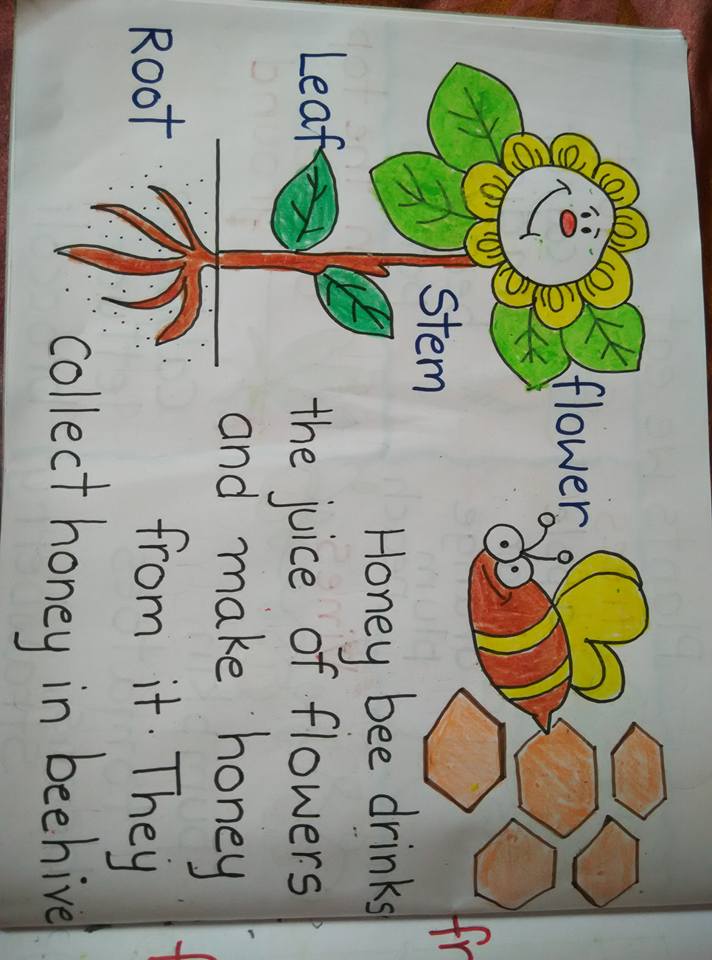
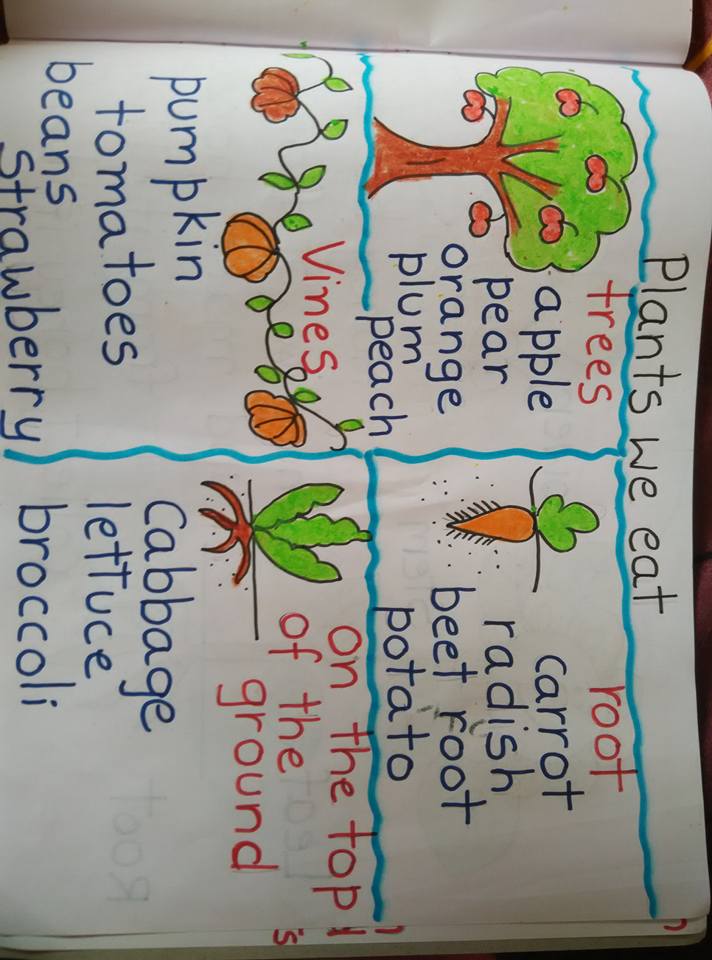
concept web 1: Plants

I do i lot of walk a talk activity with my daughter.. after dinner we generally go for q walk...i discuss nature with my daughter in a playful way..we pick dry leaves and talk about them ...


some time grass or twigs..we discuss every day about moon stars sun cloud during this night walk ,if i will take a book and sit she might not be interested so trying to introduce EVS through Concept webs,its not made for her to read , but only to understand the concept that we talk about in our night walk..

Saturday, July 2, 2016

Alphabets

Sharing my way of teaching Alphabets to my Daughter.

1.Refrigerator Magnets
Buy a bag of refrigerator magnets and use them to begin teaching letter recognition. "The most important word to a toddler is his name, so that's where you should begin alphabet knowledge. Place only the letters of your child's name on the refrigerator. If her name is Riddhi, for example, she might only pay attention to the "R" for a long time. Eventually, she'll gain interest in the other letters. When she knows her name, move on to other important words in her world, such as "mommy," "daddy" and the names of siblings.


2.Songs and Rhymes
Songs and rhymes are another way to build understanding of alphabet knowledge. Parents often begin by singing the "ABC" song. This is a good start.

"My daughter in her early years use to sings ABC song every time she use to washes her hands ,or we were out for the activity “walk a talk “ or when I was cooking ,”

Once your child can sing the alphabet song, follow through with meaningful connections to the letters. She can put together an alphabet puzzle or play with foam letters in the tub as she sings the song. Use music and rhyme throughout the day. Sing "Twinkle, Twinkle, Little Star" with your child and challenge her to pick up her toys before you're finished singing.

"Nursery rhymes, familiar songs and poetry are wonderful ways for young children to develop phonemic awareness.


3. Books
Reading books to children is the best way for them to begin to understand that print contains a message. Stock your house with colorful, sturdy books that he can easily reach.Kids particularly enjoy stories such as Brown Bear, Brown Bear, What Do You See? that have repeating word patterns. Your child's interest in the printed word will come when he is developmentally ready to recognize letters and words.


4. Games
Entertain your little one with alphabet games. Use wood or foam letters—choose letters your child knows. She can close her eyes as you hide the letters around the room. Ask her to find an "A" and a "B" and return them to you. For toddlers who make letter-sound connections, hide objects—such as a ball—and ask your child to find something that begins with "B." Play a matching game. Make two cards—upper case and lower case—for each letter of the alphabet that your child knows. Use only four or five different letter pairs. Set down the upper case letters and ask her to find their matches. A variation is to match the letter and a picture of word that has that beginning sound, such as "D" with dog.

5. Sensory Experience: Toddlers love to use their senses to discover the world around them. Make large, cut-out letters from cardboard. Cover them in sandpaper or a furry material and let your child handle and play with them Talk about the letters as she runs her fingers along them. Spread flour or shaving cream on a table and help her draw letters in it with her finger. Take her hand and guide her as she writes the letters in the flour with her index finger. Next, help her write her name or other simple words.

Alphabet cookies — lot of alphabet cookies are available in supermarkets ,those can be used in a fun way to teach alphabets .


6. Palm Letters Palm Letters—take the child’s hand, palm up, as if you were “reading their palm”. Have the child close their eyes (or at least look away) and “draw” a letter on their whole palm with your index finger. Do the lines in the same order as you would write them with a pencil. It is generally best to start with the capital letters, when there is a difference between the capital and the lower case letter. Have the child draw letters in your palm while you close your eyes, and you tell them what letter they have written. Easy to do while waiting for a bus


7. Learn the Letters of the Alphabet: Color Letters prints full-page letters of the alphabet with an animal or thing whose name starts with that letter. ‘A’ is for apple (color it red), ‘B’ is for ball, and ‘C’ is for cat—this can be a small activity where you can ask the child to decorate it with different material .

8. Letter Cards Print out: the letter cards, and have the young student color the letters with crayons or paint or markers.

To make Clothesline Letters of the Alphabet (letters to hang on a cord or string). The letters themselves are done in outline so that they can be colored and decorated. Spell out your child’s name and hang the letters on a string in their room.

When your child is familiar with a number of the letters in the alphabet, start to teach the remaining letters, preferably in alphabetical order.

Don’t try to teach too much in one go , i preferred teaching 4 to 5 letters in a day.

Behaviour

If your children’s behavior problems have you feeling overwhelmed and not knowing what to do first, you can start with these for better behavior.
1. spend one-on-one time with kids daily. By far, the best thing you can do to improve your children’s behavior is spending time with them individually every day, giving them the positive attention and emotional connection they’re hard-wired to need. When they don’t have that positive attention, they will seek out attention in negative ways, and consequences and other discipline methods won’t work.
2. sleep. Think of how you feel when you’re overtired – cranky, irritable, your head and stomach hurt. It’s the same for kids, and most toddlers up to teens get far less sleep than their growing bodies need. If your child has a sleep deficit, try moving up bedtime by 10 minutes every few nights. A well-rested kid is a well-behaved kid and can function better throughout the day, including school.
3. Follow routines. Kids thrive with a routine, so set clearly defined routines for the most challenging times of the day, like mornings, after school, mealtimes and bedtimes. Let your kids help decide how the routine will go (do we get dressed or brush teeth first? How can you help get dinner ready?) For younger kids, write out the order of the routine using pictures or words and let them decorate it, then hang it where they’ll see it every day.
4. Everyone pitches in. For better behavior, kids need to understand that everyone needs to contribute to make a household run smoothly. All kids, from toddlers to teens, should have “family contributions” (not “chores!”) they do daily – this helps bring your family closer together, teaches them life skills .
5. Encourage your kids to be problem solvers. when parents step in the middle of a sibling disagreement and determine who’s at fault and dole out punishments, it actually makes things worse. To kids, they see a winner and a loser and a need to escalate the sibling rivalry. Encourage your kids to find a resolution to the problem on their own, which will help them solve conflicts as they grow older. If you have to get involved, don’t choose sides, but ask questions that will help them figure out a solution that all parties can feel good about.
6. Send time-out to the sidelines. Practically every parent has tried to punish or correct behavior by sending their child to “time out,” but most have found it just doesn’t work or lead to better behavior. That’s because a time out in the corner or bedroom doesn’t teach kids how to make better choices the next time, and generally, a time out just escalates a power struggle. Kids, especially the strong-willed, will push back, and hard. Instead, focus on training, not punishment. Ask, “What can we do differently next time?” and role play the do-over.
7. Instead of saying” NO “ use positive options . Kids barrage us with questions everyday, and more often than not, our answer is “no,” and kids resent it. Find opportunities to say “yes” when you can. If your daughter asks to go to the indoor pool in the middle of a busy weekday, try saying, “Going to the pool sounds like so much fun. Should we go tomorrow after school or on Saturday?” Of course, there will always be things that will need a big “no,” but try to redirect them to a more positive option.
8. Don’t worry, be happy. Be the example you want your kids to see. Think about how your kids might describe you to their friends – would they say you’re fun and lighthearted, or that you’re stressed and bossy? Try changing your energy by simply smiling more. It will help you keep calmer in times of stress, and your kids will notice and keep their behavior more positive, too.
Don’t ignore the source of misbehavior. Misbehavior is always a symptom of a deeper issue, and when we can find what causes it, we can use the right strategies to correct it. stay calm and ask yourself what might be causing it.

Hyperactivity

Hyperactivity is caused by a medical condition called ADHD.
Kids who are overactive don’t just move their bodies a lot—their brains also have trouble slowing down.There are steps you can take to help manage hyperactive behavior at home and in school.
Hyperactivity is a classic sign of attention-deficit hyperactivity disorder (ADHD). It can also occur with other conditions.

What we Might Be Seeing
The signs of hyperactivity are hard to miss. And they often prompt negative reactions from other people. Until we know the reason behind the behaviors, we may find ourself getting annoyed and thinking that our child is just acting out..

Here are some behaviors that are common with hyperactivity:
Talks almost constantly and frequently interrupts others.Moves from place to place quickly and often clumsily .Keeps moving even when sitting down .Bumps into things.Fidgets and has to pick up everything and play with it

Has trouble sitting still for meals and other quiet activities.

What Can Cause Hyperactivity

ADHD: This brain-based condition often causes kids to move and talk nonstop. It’s actually the result of the brain’s “wiring” system working a little slower than is typical. Think of the game Red Light, Green Light. With ADHD the brain takes a bit longer to get started and “go.” But it also has trouble putting on the brakes to “stop.”
Being hyperactive doesn’t just mean zooming around the room. Kids may fidget or have extra movements even when doing little things like tying their shoes, writing or playing an instrument.

Kids with ADHD also tend to be impulsive and have trouble paying attention ADHD may look different at different ages. For example, a preschooler might be accident-prone while a grade-schooler may not be able to sit still long enough to finish his work.

Anxiety disorder: Anxiety can make kids restless and unable to focus. Those symptoms sometimes lead people to mistake it for ADHD. It’s not uncommon for a child to have both conditions at the same time, however.


Hyperthyroidism: Kids rarely have this condition. But when they do, it can cause them to fidget and lack focus. It also often involves eye issues like an irritation or bulging.

Inner-ear disorders: Kids with inner-ear problems are often hyperactive. These kids’ need for constant motion may be caused by their hearing and balance disorders.

Sensory processing issues: Kids with sensory processing issues can become hyperactive when they’re overstimulated or understimulated.

How we Can Get Answers
Getting to the bottom of your child’s hyperactivity is a process that may take a few steps. A good way to start is by observing your child and taking notes. Having these notes will be helpful when you talk to professionals about your concerns. And it may help you get answers more quickly.

Here’s what you can do to understand what’s behind your child’s hyperactivity.

Talk to your child’s teacher. Hyperactivity can affect learning. That’s why it’s a good idea to reach out to your child’s teacher. Together, you can talk about classroom strategies that can help.
Look into an educational evaluation. If you think your child’s hyperactivity is affecting his learning, you or your child’s teacher can request that the school evaluate him. If the school agrees, you won’t have to pay for it.

Depending on the results, your child may be able to get services and supports to meet his needs. That might include things like taking breaks during tests or taking tests in a separate room, where there will be fewer distractions. The school would commit to providing these services in writing, through a 504 plan or an IEP. But the choice to pursue an evaluation is totally yours.

Talk to your child’s doctor. This is also a good place to start. Bring your notes with you to the visit, and share your concerns. The doctor may want to rule out hyperthyroidism and other possible medical causes of your child’s hyperactivity.

There are some questions you’re likely to be asked to get a better sense of what’s going on. They may include things like how long you’ve been seeing the behaviors, whether they’re getting worse and whether the teacher sees them, too. The doctor may also recommend a psychological evaluation to look at how your child thinks and to assess whether he has ADHD or anxiety, or both.

Talk to specialists. You may be referred to more than one specialist to get to the bottom of your child’s hyperactivity. An audiologist would look for hearing problems. A neurologist, psychiatrist or developmental behavioral pediatrician would look for brain-based medical issues including ADHD. And a psychiatrist or psychologist could diagnose anxiety disorders.

Professionals
who can prescribe medications for these issues include your child’s doctor, a psychiatrist, a neurologist or a physician’s assistant.

See a private learning specialist. ADHD can have a big effect on your child’s learning. A psychologist can do an evaluation to see what the impact is and if any learning issues are at play. The tests are the same as what they use in a school evaluation. But you’ll have to pay for this testing since it’s done privately.

Tutors can help kids develop strategies to keep ADHD from getting in the way of their learning. But tutors don’t perform formal evaluations.

What You Can Do Now

Even if you don’t get an evaluation, there are many things you can do to find support. There are also strategies you can try to help your child manage his behavior. Just remember to pace yourself. Trying too many at once can make it hard to figure out which ones are working the best for your child and for you. Here are some suggestions:

Learn as much as you can. Understanding your child’s hyperactivity is the first step to getting him the help he needs. The more you know, the better able you’ll be to find ways to help him gain self-control skills.

Observe and take notes. By observing your child’s behavior, you may be able to spot patterns and triggers. Maybe his activity level rises as the night wears on. Or perhaps he has a hard time falling asleep and is overtired. Recognizing the trigger allows you to try different strategies like changing his bedtime routine to have more quiet time and get a full night’s sleep.

Provide things to fidget with. Let your child chew gum, carry a stress ball or have some other object to fiddle with. It can help direct some of the overactivity and cut down on your child picking up and playing with other items.

Consider martial arts or yoga classes. Physical activities give your child an outlet for his energy. These can also teach your child to be aware of his movements and be in control of his body.

Try different strategies. For new ideas on dealing with behavior issues, check out the expert advice in Parenting Coach. You may find helpful tips for handling your energetic child.

Connect with other parents. Knowing you’re not the only family out there dealing with hyperactivity can make a big difference. Connect with parents in similar situations and share information and advice. It can be a great source of support.

Understanding more about what’s going on with your child can help you start to get out in front of his behavior issue rather than always reacting to it. Looking at your child’s strengths, finding support for yourself and changing things a little at a time can make both of you feel more confident and in control.

Talking to your child’s teacher and doctor is a good first step to getting your child the support he needs.
Hyperactivity is a sign of a medical condition, not the result of bad parenting.
Giving a fidgety child a ball or some putty to squeeze can help him concentrate.

Being Positive


Do you know the average child hears 432 negative comments or words per day versus 32 positive ones?

If there were a hidden camera in your house, how many times per day would you catch yourself saying “No” or “Don’t” to your kids?
NO or DON’T commands create several problems, especially for young kids…

Double-processing. “Don’t” commands require a child to “double-process.” He has to think “Well, what does she NOT wants me to do?” and “What does she want me to DO instead?” This can be very confusing, especially for young kids.
  • It reinforces the negative behavior. Instead of hearing what you want the child to do, she is reminded of what she shouldn’t do. Which command do you think she’ll remember?
  • It’s discouraging. If 93% of the feedback you received during the day were negative, you would likely feel discouraged. That’s how our kids feel.
I’m not suggesting we can eradicate all of the “Don’t” or “No” commands from our communication, but we can make shifts in the percentages with the following strategies:

Practice using “DO” commands. Calmly state what you want your child to DO. Rather than, “Don’t run in the house.” Try, “Please use your walking feet in the house.” Rather than, “Don’t chew with your mouth open.” Try, “Please try to make your lips touch each other as you’re chewing.”

Find opportunities to say YES! Rephrase your comments to imply “YES.” Rather than, “No, we don’t have time to go to the park today;” try “The park sounds awesome! Would you rather go Wednesday evening or Saturday morning?” Instead of, “Don’t color on the walls.” Try (in a calm voice!) “You can color on this paper or with sidewalk chalk outside.” Rather than, “We’re not going anywhere until that room is clean!” Try – “YES, when your room is clean, then we’ll leave for the mall. Sounds like fun!” (She still has to clean her room but it’s more encouraging hearing a YES response rather than a NO.)

Friday, July 1, 2016

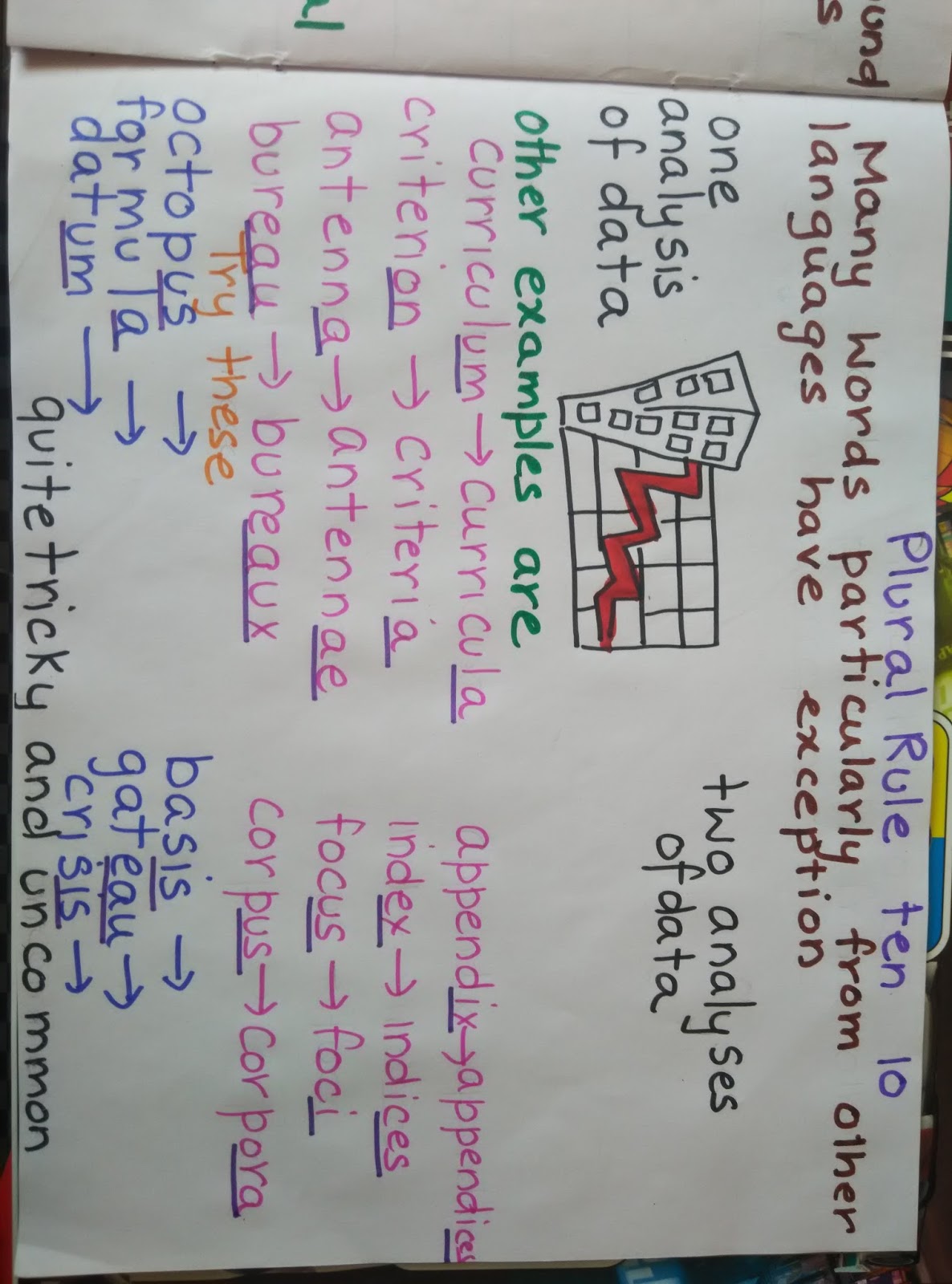
Teaching Singular Plural with the help of Rules


Tantrums

 The methods for dealing with temper tantrums and meltdowns are different than those for dealing with normal anger and frustration. Appealing to the child with logic or threatening consequences is unproductive.When a child breaks down in public , parents feel like failures — we should be able to control our child, right? We see the judgment in other parents’ eyes, and we resent the “helpful” suggestions from the passerby who means well but who doesn’t know a bit about parenting. To help a kid having a temper tantrum or meltdown, the parent needs to understand what the child is experiencing. They need to realize that, presently, this very young person is completely overwhelmed by emotions. The kid having a meltdown has no understanding of himself and of what he is feeling. He feels fragmented and out of control.
Stay ahead of your child's particular needs and sensitivities.
Hunger, over-stimulation, anxiety, boredom and sleepiness are all common causes for toddler tantrums. Match your expectations to the appropriate age/developmental stage of your child. You can't expect a three-year-old to maintain his enthusiasm at being carted around all day long doing errands, nor can you diminish his feelings about not getting that toy truck by yelling at him to get up of the floor and stop crying right now!
Avoid No, Don't & Stop
 Try counting in one day how many times you say the above three words. You may be surprised at how often you are saying "No" to your child. "No's" are sometimes necessary and helpful, but be aware of when you are saying "No" for convenience or simply because you aren't emotionally prepared to investigate deeper.
A child who hears the words "No, Don't, or "Stop" really only hears whatever follows "No, Don't, and Stop." These words turn limit-setting into power struggles leading everyone to feel - out of control. This is not the way to handling temper tantrums with ease.You will only drive yourself crazy. Find the need behind your child's behavior and you will find yourself an opportunity to help him through it.
Connect and make eye contact with your child.
It is absolutely crucial that you get down on your child's level. If you are in the habit of yelling your requests from two rooms away, you will likely have a child who mostly ignores you. Use physical touch to initiate a connection. Make eye-contact (don't demand it) and wait for your child to notice you.Adopt a firm but non-threatening tone that is clearly distinguishable from your normal speaking voice to emphasize impending danger or emergency requests. This eliminates the need to yell. A clear, emphatic, parental attitude and tone will give your child an unmistakable signal that they are about to cross a boundary - but without intimidation.
 Keep your child in the loop.
Transitional tantrums are the hardest on kids. It is not appropriate to expect a toddler or even an older child to immediately stop what they are doing, and change course just because you ask nicely.
Get in the habit of giving your child a 5 minute, 3 minute and 1 minute warning before cutting off the current activity. Kids need transition time. Some need more than others if they are sensitive or have a difficult temperament.
 Give choice.
Instead of demanding what you want your child to do. Give them a choice. Make your requests brief and clear. Don't talk too much or too long. Lectures and too much information cause overload in the young brain. They can't process it all at once.
Try: Would you like to first brush your teeth or put on your pajamas?  
Kids like to feel autonomous and in control of their own lives. Guide them to being independent and self-reliant by gradually providing more and more opportunities for them to make decisions about things that affect them - life, health, play, exercise, school, family etc.
The "Clean your room - how many things can I pick-up in three minutes" contest.
Sing songs as you bathe or dress your tot.
Challenge your toddler to a race to clean up the blocks.
Be silly and creative
Talk with an accent, put a sock on your hand and crawl around on the floor like a lion, sing opera - be willing to use PLAY and FUN to connect.
The elderly people of the house  may have convinced you that your child should "do as they're told, when they're told" and do so without a lot of hoopla. That advice no longer applies, Our kids need to know more about handling life than just our opinions of their performance.
handling your toddler's temper tantrum depends on Your ability to remain calm and creative in the face of chaos and not cower from fear due. You can ignore the steely glares of other parents - they are not raising your child.How well you can intuit your child's needs in advance.

Handling temper tantrums does not have to exhaust you or take over your days. Parenting can sometimes humiliate us, attempt to strip us bare of our emotional baggage, single out all our fears and sometimes make us want to pull out our hair.

"We can get through it." That's all you need to share with your child to handle a temper tantrum.